
 Kevin Johnson
Collectors of fancy shoes have a lot to pick from. The world of luxury footwear is big, full of stories and styles. Some buy to wear, some just like owning something rare. Prices change with design, leather, and how much handwork goes in. Some pairs are ready to wear, some made-to-order, and a few made just for one person. Every stitch done slowly, by hand.
Most of these brands start around four hundred or a thousand dollars. But if you look at their top pieces, the price jumps to five or six grand easily. Some even go higher when diamonds or rare designs are involved.
Here are 15 of the most high-priced shoes brands in the world. Each of them has its own story, its origin and their explanation as to why they cost so much. We have also added pros and cons, just to keep things real. So let’s explore them without further ado.
1. John Lobb
Price range: $1,300 – $6,500+
Country: Northampton, England
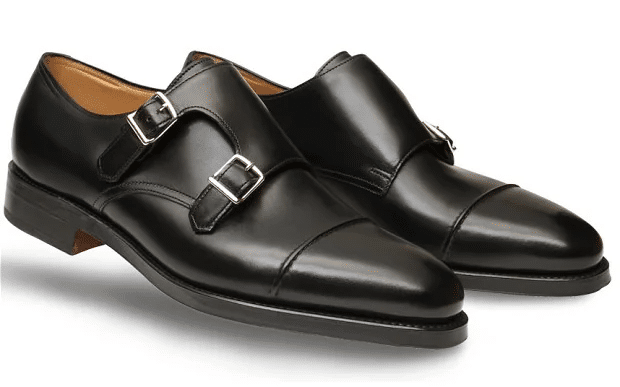
Image Source: John Lobb
John Lobb sets the bar for classic men’s shoes. Their ready-made ones are already pricey. But the bespoke ones, that’s another level. Each pair is shaped by hand, fitted again and again till it’s right. You pay for the fit, the stitches, and years of quiet skill behind it.
Pros
- Superb fit from bespoke options.
- Durable, repairable construction.
- Prestigious heritage brand in men’s formal footwear.
Cons
- Long lead times for bespoke.
- Very high entry price for custom work.
- Conservative styling may not suit trend-focused wardrobes.
2. Hermès
Price range: $800 – $5,000+
Country: Paris, France
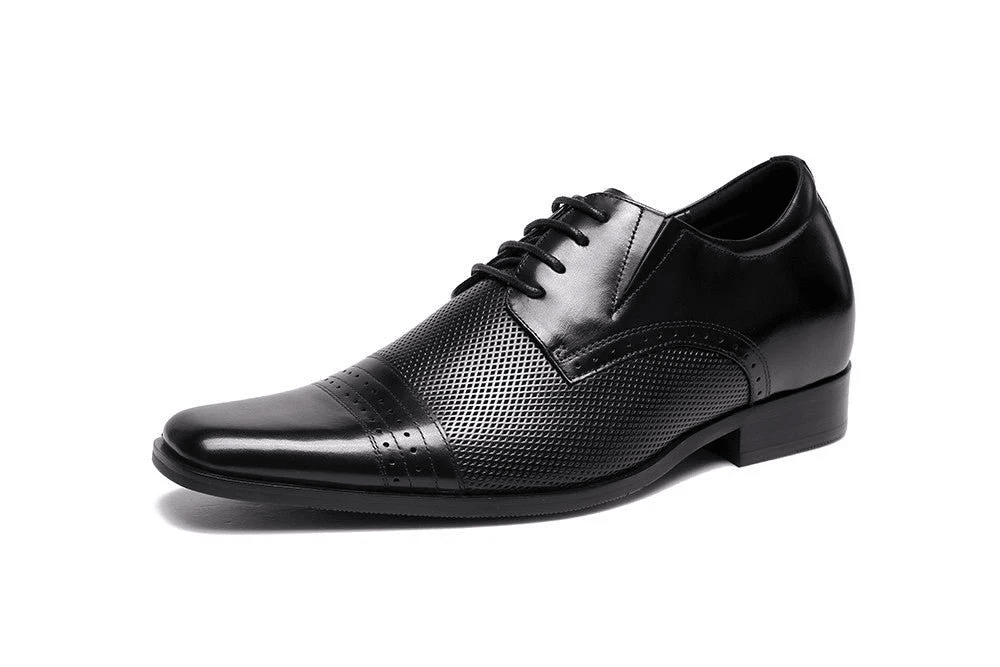
Image source: Hermès
Hermès is all about leather. The brand makes loafers, sandals, and boots with perfect care. Every pair feels rich, made from top leather and strict handwork. Their prices stay high because of that quality and the name itself. These shoes don’t follow trends much. They last long, age nicely, and often keep their value.
Pros
- Exceptional leather quality and finishing.
- Strong resale and brand recognition.
- Timeless, conservative designs with wide appeal.
Cons
- High price for modest silhouette changes.
- Limited availability on popular styles.
- Not focused on trend-led streetwear (less appeal to sneaker collectors).
3. Gaziano & Girling
Price range: $1,200 – $4,500+
Country: Northampton, England
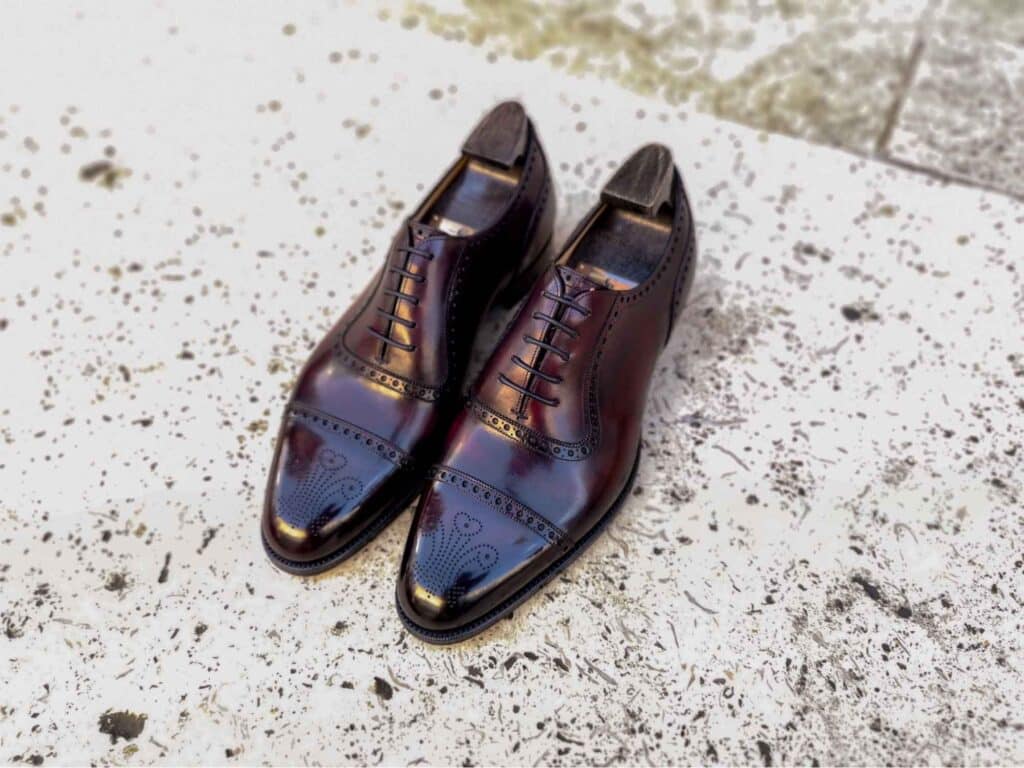
Image Source: Gaziano & Girling
A modern craft house built on classic English techniques. Gaziano & Girling blends bold last shapes with fine finishing. Their made-to-order and bespoke lines target connoisseurs who want unique lasts and a more daring aesthetic than some older houses.
Pros
- Distinctive design language with excellent craft.
- Good MTO program for a better fit without a full bespoke price.
- Strong reputation among shoe collectors.
Cons
- Pricey for limited-production models.
- Less global retail footprint than megabrands.
- Resale value can vary by model.
4. Berluti
Price range: $1,000 – $4,000+
Country: Paris, France
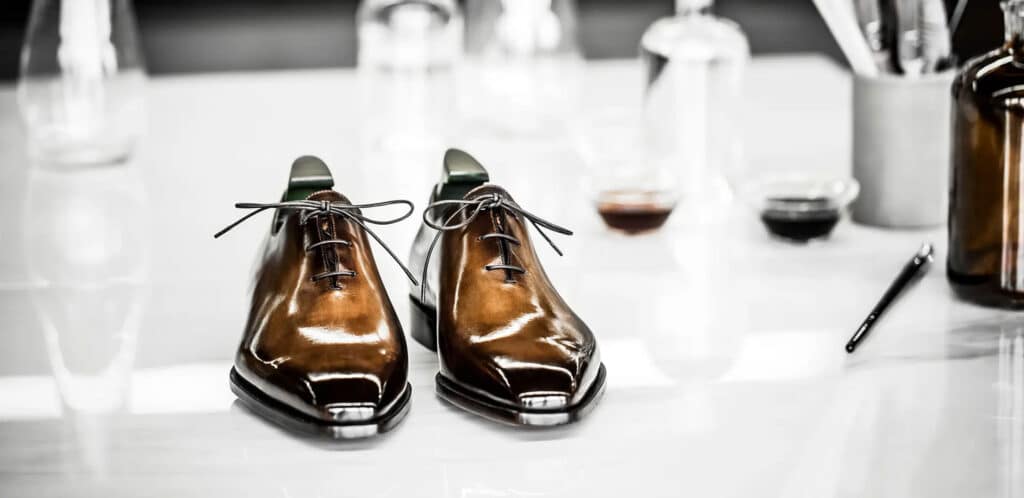
Image Source: Berluti
Berluti began as a small bespoke shoemaker. Now it’s a full luxury brand. A reputed producer of soft, patinated leather loafers and boots. Their ready-made shoes are already high-end. However, the price climbs fast once you go bespoke or made-to-order.
Pros
- Beautiful patinas and rich leather finishing.
- LVMH-backed stability and global boutiques.
- Excellent for formal and smart-casual looks.
Cons
- High price for branding as much as craft.
- Limited women’s offerings relative to other houses.
- Patina care requires maintenance.
5. Christian Louboutin
Price range: $700 – $2,500+
Country: Paris, France
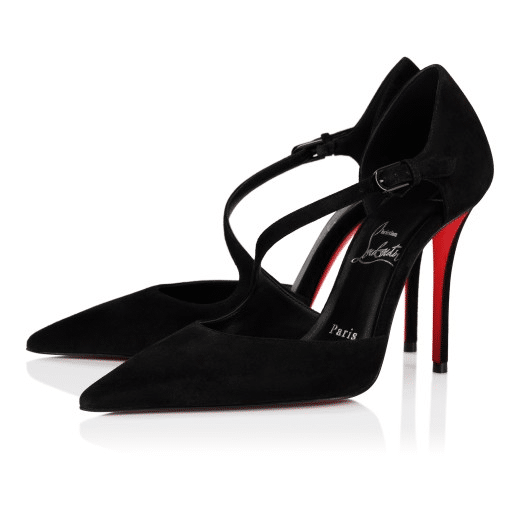
Image source: Christian Louboutin
Christian Louboutin means the red sole. That’s what everyone knows first. Their heels and bold designs come with a heavy price tag. Some limited ones or red-carpet pairs cost way more. The brand stays in the spotlight, worn by celebs and seen everywhere, which keeps its value high.
Pros
- Strong cultural cachet and instant recognizability.
- Wide product range and steady demand.
- Frequent collaborations and limited drops.
Cons
- Often premium is paid for branding vs. construction.
- High heels may sacrifice comfort.
- Counterfeits are common so try to buy from authorized outlets.
6. Louis Vuitton
Price range: $600 – $2,500+
Country: Paris, France
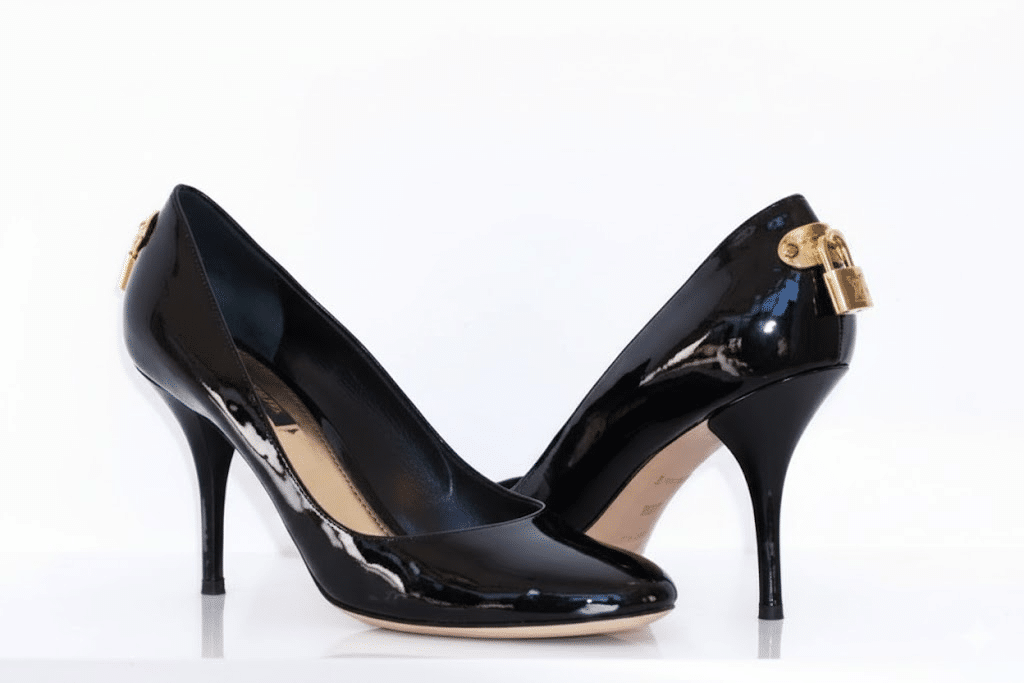
Image source: Louis Vuitton
Louis Vuitton presents shoes as an element of a complete luxurious life. Everything feels rich be it the sneakers, the boots and the shiny dress shoes. Their leather skill shows in every pair, and the prices match that level. The famous monogram and signature always cost more, just because they’re LV.
Pros
- Strong brand equity and collector interest.
- Good leather quality and recognizable design cues.
- High resale on limited editions.
Cons
- Often sold as fashion statements rather than craft-first pieces.
- High prices reflect the brand more than bespoke finishing.
- Popular models sell out quickly.
7. Edward Green
Price range: $700 – $2,500+
Country: Northampton, England
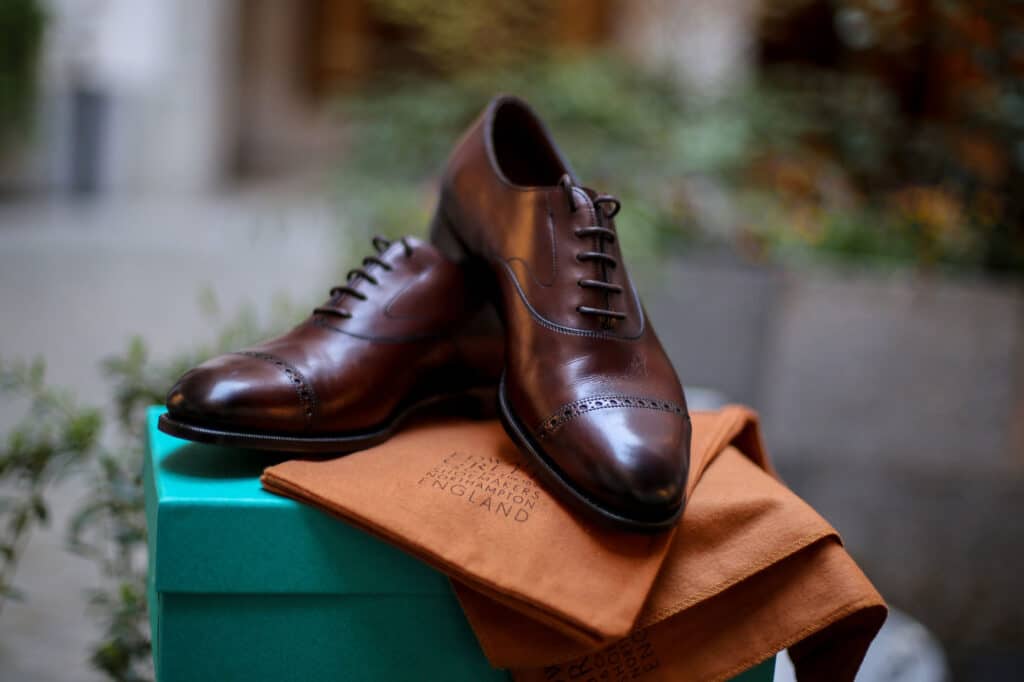
Image source: Edward Green
Edward Green is a true English classic. Simple, quiet, but made with real skill. Their shoes use fine leather and a solid welted build, made to last for years. Often seen as one of the top names in pricey, traditional footwear
Pros
- Excellent construction and materials.
- Timeless silhouettes that hold value.
- Trusted by collectors.
Cons
- Narrower stylistic range.
- Premium price for classic aesthetics only.
8. Tom Ford
Price range: $600 – $2,500+
Country: United States
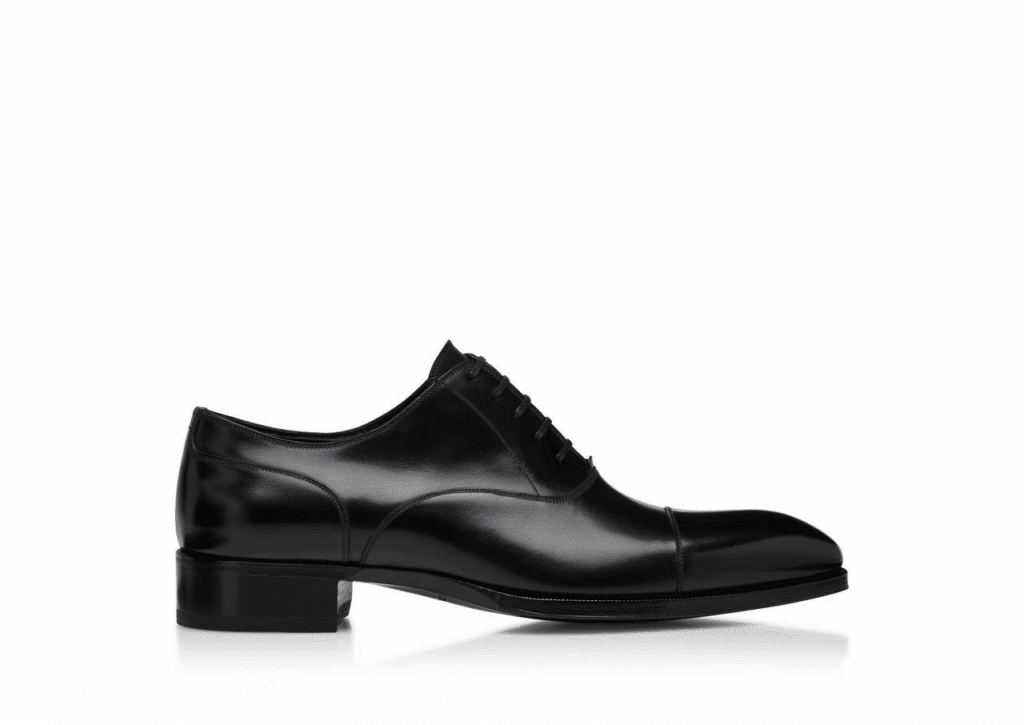
Image source: Tom Ford
Tom Ford shoes show that sharp, confident style he’s known for. They cost like real luxury and fit right into business or red-carpet looks. Both men and women pick them for that clean, modern touch that stands out.
Pros
- Strong, modern tailoring and premium materials.
- Clear brand positioning for executives and stylists.
- Good build quality.
Cons
- Fashion-forward choices can be faddish.
- Pricier than many comparable designer labels.
9. Gucci
Price range: $500 – $2,000+
Country: Florence, Italy
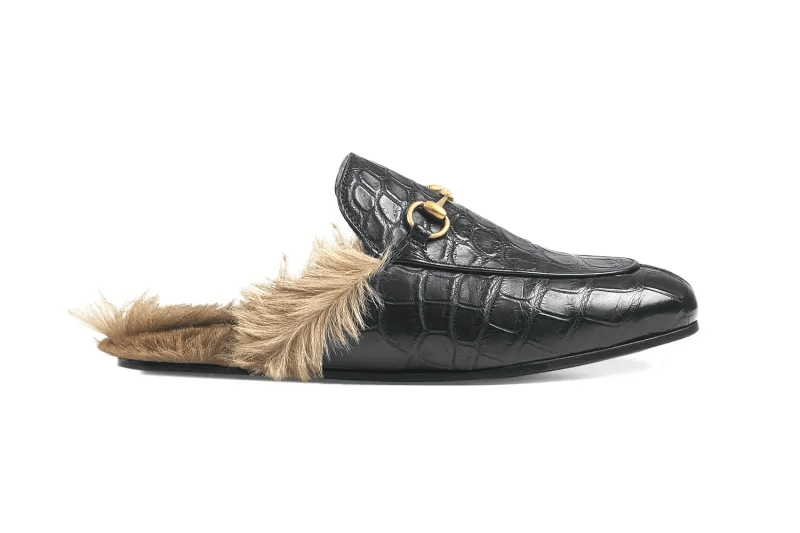
Image source: Gucci
Gucci shoes mix strong branding with fashion-forward design. The house asks premium prices for logoed loafers, sneakers, and seasonal statement pieces. Gucci’s global pull and frequent collaborations help maintain a high price perception.
Pros
- High visibility and strong resale for iconic models.
- Trend-aware while also offering classics (Horsebit loafer).
- Worldwide retail support.
Cons
- Heavy logoing can be polarizing.
- Fast-fashion cycles lead to more design turnover.
- Not all models age well for resale.
10. Prada
Price range: $500 – $2,000+
Country: Milan, Italy
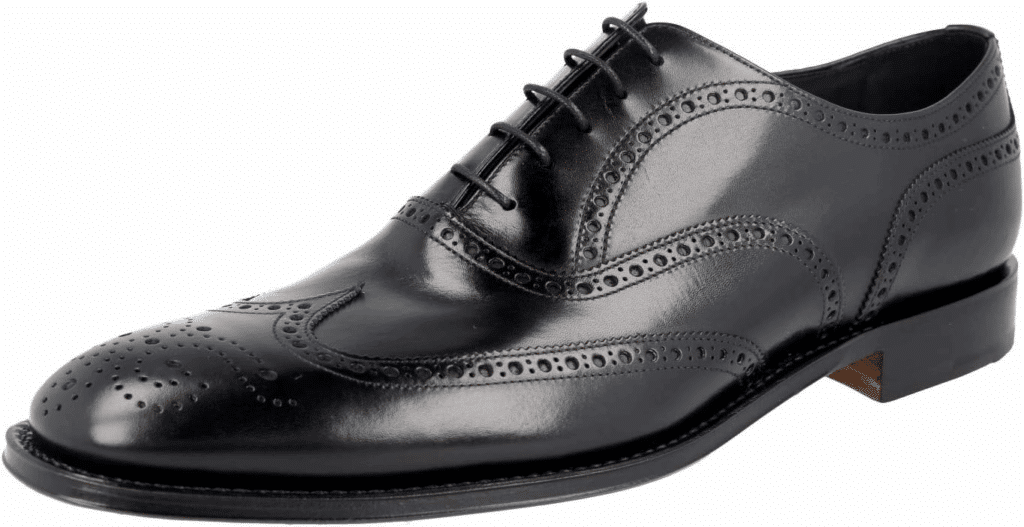
Image source: Prada
Prada blends bold design with rich materials. Their shoes sit high in the luxury range. From sleek leather pairs to trendy sneakers, every style carries a strong price and a modern edge.
Pros
- Strong design leadership and fashion relevance.
- Broad category coverage (formal to athleisure).
- Good production quality.
Cons
- Less artisanal than bespoke shoemakers.
- Style risk: trend pieces age faster.
11. Stuart Weitzman
Price range: $300 – $2,000+
Country: United States
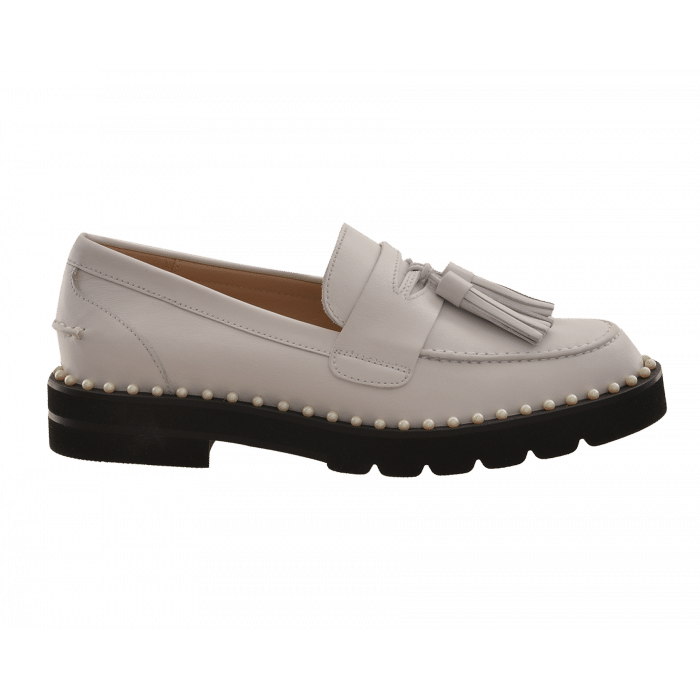
Image source: Stuart Weitzman
Stuart Weitzman is famous for its fancy heels and star moments. Most of their shoes sit in the mid to high luxury range, but some rare ones go sky-high, like the diamond ones made for shows. Their red-carpet image keeps the brand on every “most expensive” list.
Pros
- Celebrity association and strong retail presence.
- Comfortable engineering in many designs.
- Range from mainstream to standout special editions.
Cons
- Mixed perception: some models are mass-market.
- The highest price points are one-off promotional pieces.
12. Roger Vivier
Price range: $500 – $2,000+
Country: Paris, France
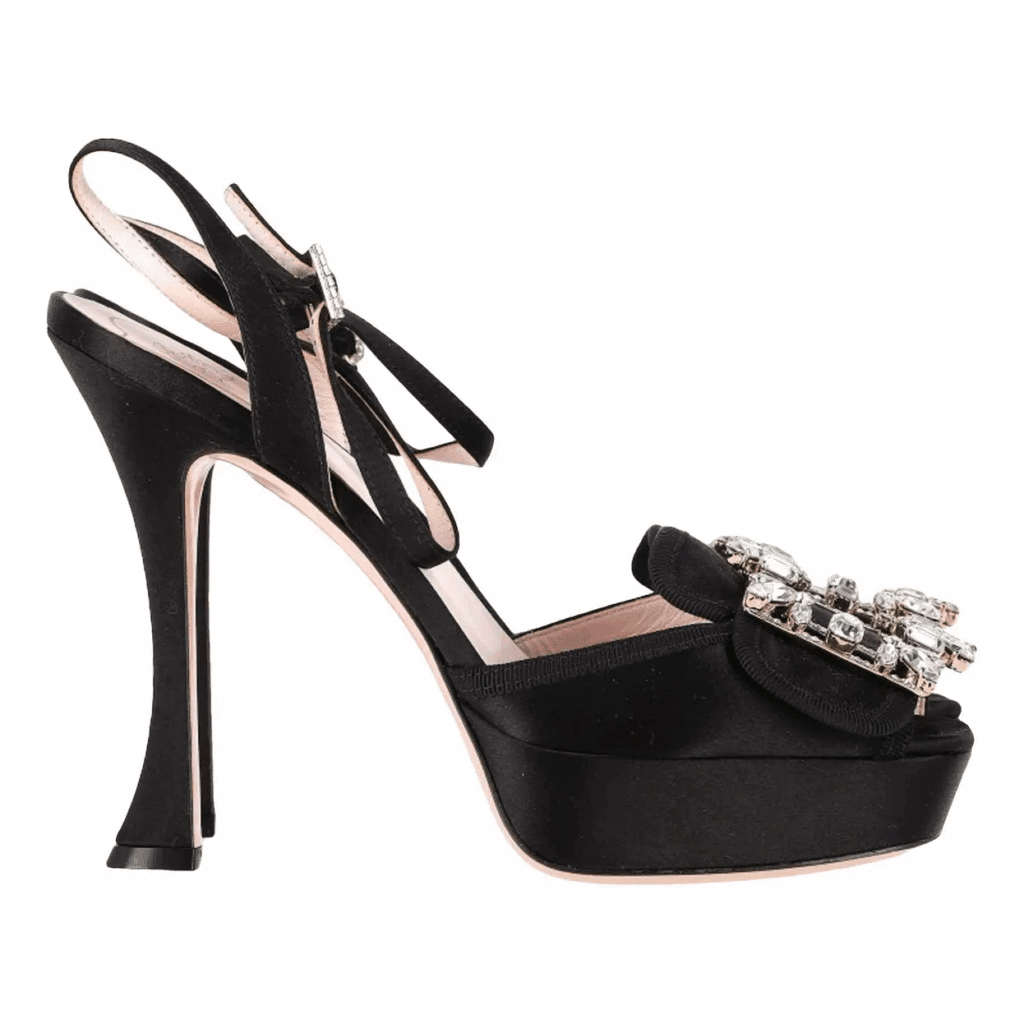
Image source: Roger Vivier
Roger Vivier is recognized in terms of polished buckles and artistic heels. It has the old-world, royal touch. Many collectors and stylists love it. Prices stay high because of the unique design and long heritage behind each pair.
Pros
- Distinctive, fashion-forward signatures (buckles, heels).
- Strong editorial cachet.
- Good collector interest for limited lines.
Cons
- Design-led pieces may be niche for everyday wear.
- Patina and care needs on certain finishes.
13. Manolo Blahnik
Price range: $500 – $2,000+.
Country: Canary Islands, Spain
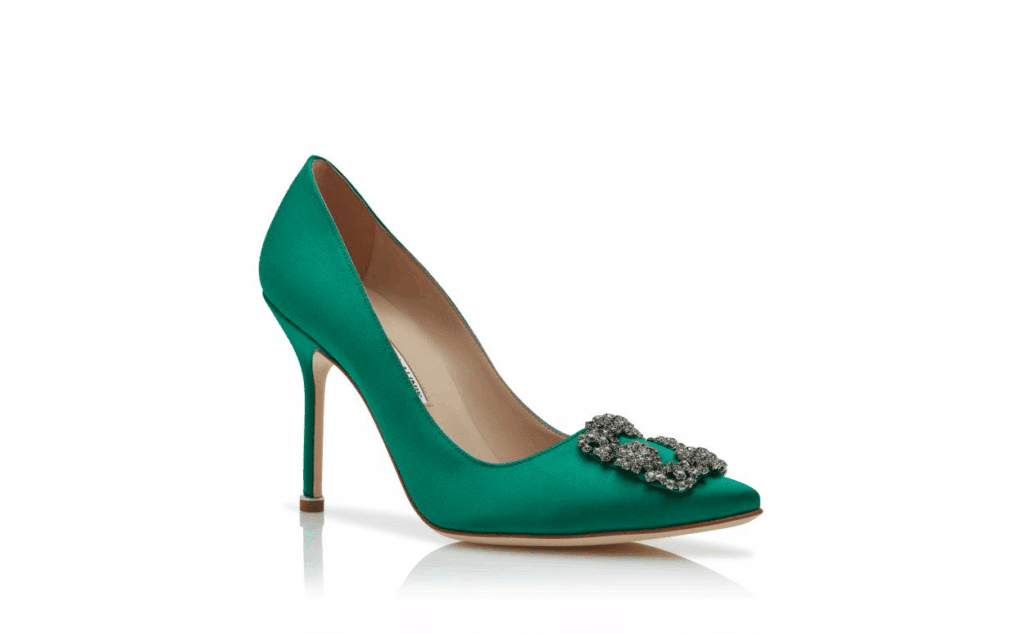
Image source: Manolo Blahnik
Manolo Blahnik gained popularity via pop culture. Known for its elegant pumps and graceful shapes. The brand is centered around balance, beauty and that classic style that women are obsessed with. Prices are equivalent to the name and the attention to each heel.
Pros
- Iconic designs with consistent demand.
- Strong fit and proportion for classic shapes.
- High resale on collector styles.
Cons
- Range skews formal, less for casual wardrobes.
- Not known for extreme comfort on high heels.
- Limited men’s offering.
14. Jimmy Choo
Price range: $500 – $2,000+
Country: London, UK
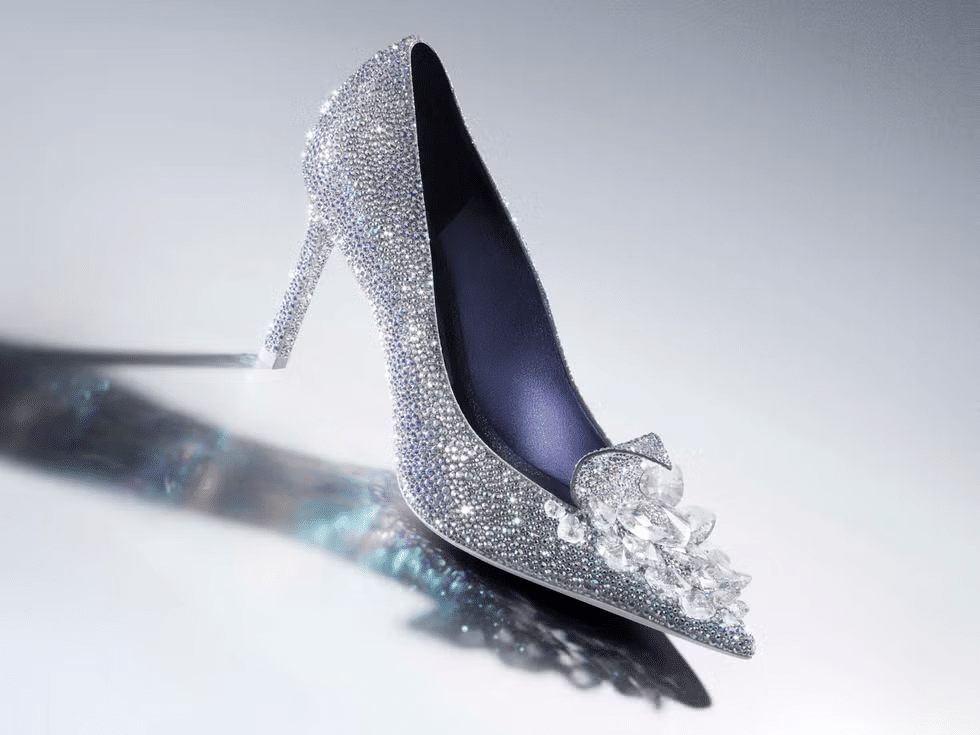
Image source: Jimmy Choo
Jimmy Choo offers red-carpet glamour and a broad footprint. Prices are premium but accessible relative to bespoke houses; special editions and celebrity collaborations push prices higher. Choo is a strong, recognizable luxury label with steady global demand.
Pros
- Wide model selection and global retail.
- Recognizable brand for gifting and corporate events.
- Good balance of style and wearability.
Cons
- Heavy branding in some lines.
- Limited bespoke/off-menu options.
- Some lines age faster stylistically.
15. Salvatore Ferragamo
Price range: $400 – $1,500+
Country: Florence, Italy
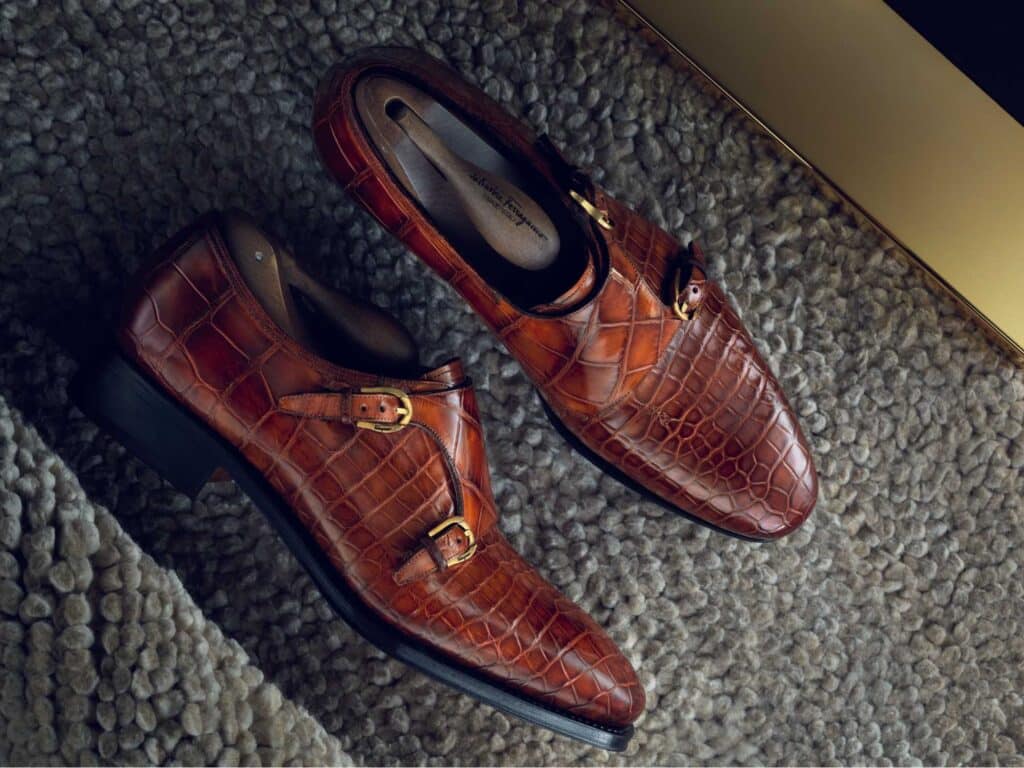
Image source: Salvatore Ferragamo
Ferragamo is an old Italian name known for comfort and class. Their dress shoes and pumps feel refined but easy to wear. Prices sit below full bespoke brands, yet are still very much luxury. They mix skill, new tech, and wide appeal in a smart balance.
Pros
- Comfortable lasts and good value for a luxury brand.
- Strong heritage and made-in-Italy cachet.
- Large accessory ecosystem for coordinated gifting.
Cons
- Not at bespoke price levels.
- Popular styles can be ubiquitous.
- Less exclusivity than small ateliers.
Conclusion
Luxury shoes are a strange world. They are expensive to buy, but also kind of fascinating. Each brand has its own story, some built on history, some on design, some just on fame. You do not just pay for the shoe. You buy the name, the work that goes behind it and the little push that you get when you put it on.
So, these expensive shoes aren’t just about money. They’re about pride, craft, and the story stitched into every piece. Maybe that’s what makes them worth it.
References & more information
- Afzal M. 25 Expensive Shoe Brands
- Kaufman G. 15 Luxury Shoe Designers That Stand the Test of Time
- 45 Most Expensive Shoe Brands
- Featured image by Ayrus Hill
Tell us what you think? Did you find this article interesting? Share your thoughts and experiences in the comments section below.






 S.K. Gupta



Add comment