
 Kevin Johnson
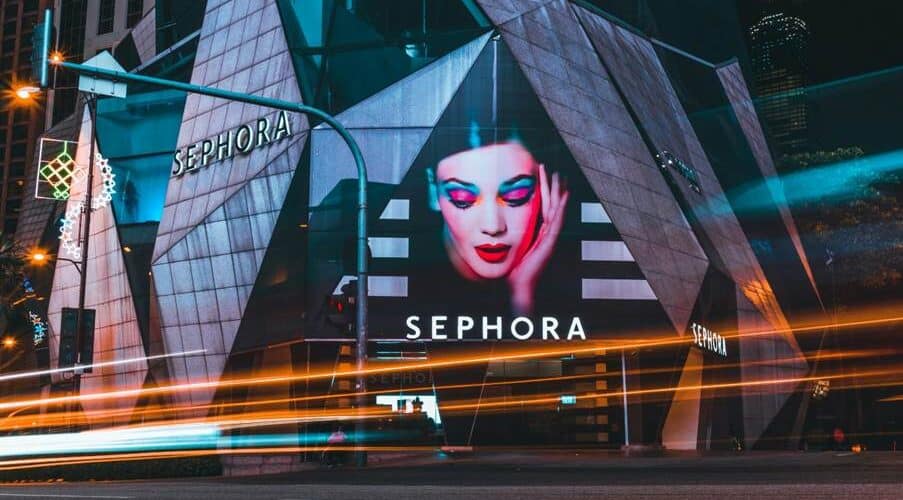
Sephora is a French personal care and beauty company founded by Dominique Mandonnaud. It is the world’s leading prestige beauty omnichannel retailer, offering over 300 brands and the Sephora Collection private label. Moët Hennessy Louis Vuitton (LVMH) acquired Sephora in 1997. In 2024, LVMH’s annual revenue increased by 1% to €84.7 billion. Its profit was €19.6 billion. The Sephora brand achieved profitability and global success by focusing on its SWOTS – harnessing its strengths, reducing weaknesses, capitalizing on opportunities, and mitigating threats. [1]
Here is an in-depth analysis of Sephora’s SWOTs (Strengths, Weaknesses, Opportunities, and Threats):
Sephora’s Strengths
Sephora invests in its strengths to outperform competitors and grow its customer base. These elements fuel the brand’s growth and profitability. Let’s explore Sephora’s strengths:
1. Product Variety
Sephora strives to cater to the unique and peculiar needs and preferences of its target audience. Its inventory spans the cosmetics, beauty, skincare, hair care, nail polish, and body care categories. The company sells Sephora-branded items and products from leading global brands. In Feb 2025, Sephora added nine Aestura SKUs to its online platforms and stores. Aestura is Korea’s top dermatologist-recommended brand. Its Atobarrier365 has patented technology for hydrating the skin and boosting the skin’s barrier. The brand will strengthen Sephora’s position among Korea’s beauty consumers. [2]
2. Excellent Fashion Experiences
Sephora is committed to creating a world-class fashion experience. The beauty retailer achieves this mission by investing in consumer-facing events and influencer activations. For example, its SEPHORiA tentpole franchise moved to Atlanta in 2024 with a reimagined experience. SEPHORiA popped up in international cities for the first time in early 2025. In Apr 2025, the company integrated the “Sephora Hairlines” influencer experience into its “Prep, Style & Refresh” campaign to promote its haircare and styling products. This event offered a trip on a branded private jet and a stay in a five-star Napa Valley resort to top beauty and hairstyle content creators. [3]
3. Strategic Brand Partnerships
Sephora collaborates with pop icons and industry leaders to strengthen its market position. It partnered with Glow Recipe in 2024 to host a bicoastal pop-up experience inspired by Seoul’s iconic night markets. The event marked Sephora’s 10th anniversary and offered exclusive merchandise and product sneak peeks in Los Angeles and New York. In Nov 2024, Sephora Canada launched Shimmer Studio by Sephora for Taylor Swift’s fans. This pop-up experience coincided with Taylor Swift’s concert dates in Toronto. Attendees explored Sephora’s makeup, skincare, and hair care products for creating concert-ready looks. [4]
4. Excellent Brand Reputation
Sephora nurtured a cult-like following by focusing on the needs of its customers and employees. The brand was featured on Forbes’ America’s Best Employers and scored 100% on the Human Rights Campaign’s Corporate Equality Index for several years. According to Statista, Sephora has 80% brand awareness in the US. 33% of US beauty and health online shop users like Sephora, 25% use its products, and 21% are likely to shop at Sephora again. [5]
5. Innovative Retail Strategy
Sephora adopted the open-sell retail format. Customers can try beauty products before purchasing. Its stores display eyeshadows, lipsticks, and serums under signs with compelling slogans, such as the “next big thing” and “hot on social media.” This strategy boosts sales by streamlining product discovery and experimentation. In 2023, Sephora was the fastest-rising retailer in Interbrand’s annual Best Global Brands report. [6]
6. Efficient Omnichannel Strategy
Sephora integrates its physical stores with e-commerce and digital channels to create a seamless shopping experience. It leverages innovative tech-driven solutions to streamline the customer journey. In Jun 2025, NielsenIQ and Sephora announced a strategic collaboration to unlock access to insights into the North American beauty space. Sephora will leverage NIQ’s Omnishopper and Digital Purchases solutions to understand shifts in consumer buying behavior across online and offline channels. This collaboration will help Sephora anticipate customers’ evolving needs, strengthening its retail strategy. [7]
7. People Empowerment
Sephora accelerates its growth by empowering people. Its incubator nurtures and propels emerging BIPOC-founded businesses. In Dec 2024, Sephora North America added eight BIPOC beauty brands to its 2025 Accelerate program. This initiative champions diverse founders and empowers them with resources and expertise to launch and thrive. Since 2021, 33 brands have completed the program, and over half of the brands are now sold at Sephora. The company also empowers talented entrepreneurs through the Sephora Impact Summit and Sephora Beauty Grant. These efforts strengthen the brand’s position among Black, Asian, and Latino consumers. [8]
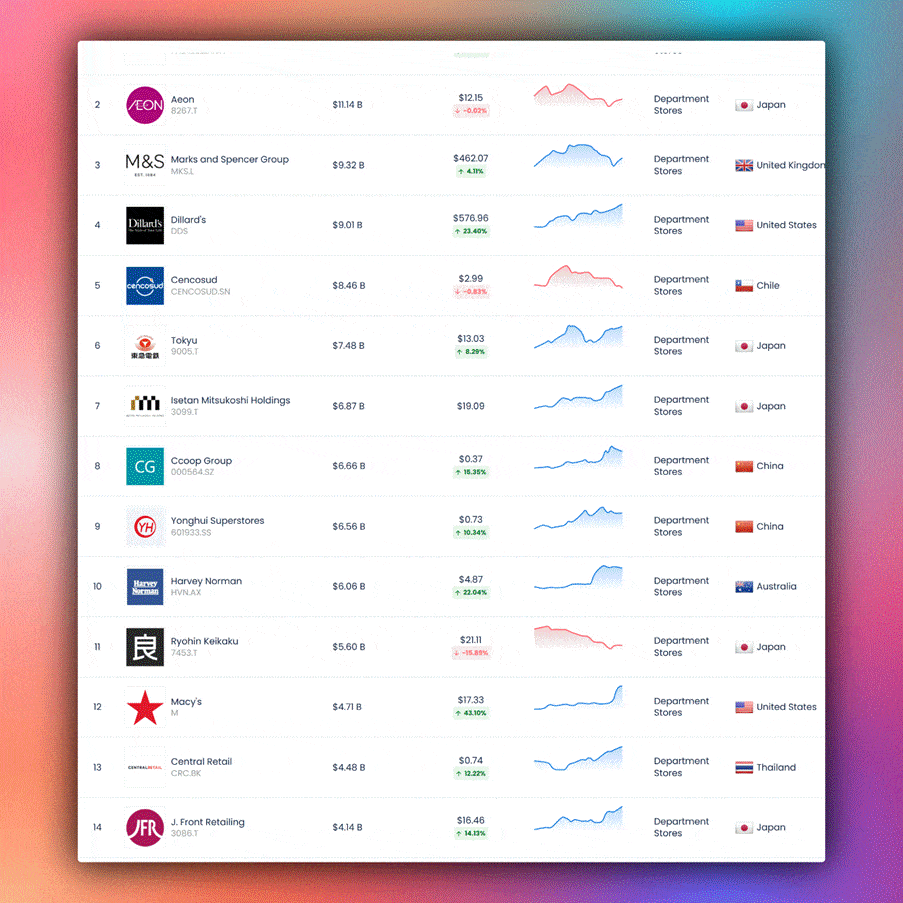
Checkout: Largest department stores companies in the world by market cap
Sephora’s Weaknesses
Sephora’s weaknesses undermine its competitiveness and growth. These issues can undercut sales and profitability. Here are Sephora’s weak points:
1. Costly Products
Sephora is a premium beauty and personal care specialty retailer. It gained cult status among makeup and skincare enthusiasts by offering luxury brands, an interactive store experience, expert advice, and personalized service. The brand offers high-end products at higher prices than the market’s average. According to Numerator stats, 55% of Sephora shoppers have a household income over $85,000. These consumers spend $85 at Sephora per visit, which is 2 to 3 times more than at Ulta Beauty, Target, or Walmart. Sephora’s Beauty Insider members splurge around $415 annually compared to $117 for non-members. Its pricing model doesn’t appeal to budget-conscious consumers. [9]
2. Poor Global Market Penetration
Although Sephora is a global brand, it only operates in 35 countries. Its market presence varies regionally. For example, Sephora’s penetration in fast-growing Asian economies is low compared to its competitors. The company exited South Korea in Mar 2024, following years of financial losses. It operated in Korea for less than five years. “With heavy hearts, we have decided to cease operations in Korea. We will gradually wind down our presence across online platforms, mobile applications and physical stores, ultimately withdrawing completely from the market,” posted Sephora Korea on social media. It is focused on North America and Europe. Yet, demand for beauty products is increasing in emerging markets. [10]
3. Over-reliance on Physical Stores
Sephora has a significant online presence. However, the company still generates most of its revenue through physical stores. It operates 3,200 stores and iconic flagships globally, including over 700 locations in North America. In Jan 2025, Sephora announced plans to redesign every store in its North American fleet. It is the brand’s largest capital project. Its beauty advisers check out 25% of shoppers via mobile. [11]
4. Service Inconsistencies
Sephora’s in-store experiences and services vary regionally. The company operates stand-alone stores and shop-in-shop locations in North America, Australia,Europe, Asia, and the Middle East. In-store experiences aren’t uniform across all Sephora stores worldwide. For example, Sephora hosted a Makeup by Mario AR mirror in 2024 for shoppers to virtually try Mario Dedivanovic’s new bronzer. This service was only available at Sephora’s flagship Times Square store. Inconsistencies undermine customer experiences. [12]
5. Channel Dilution
Sephora is a prestige beauty retailer. It resells high-end products from various brands under one roof. This strategy undermines Sephora’s authenticity and brand image, dilutes its channel, and exposes the company to vulnerabilities beyond its control. For example, in Aug 2025, Sephora reviewed its partnership with Huda Beauty after founder Huda Kattan promoted unfounded anti-Israel conspiracy theories on TikTok. Jewish organizations condemned Kattan’s video and renewed calls for Sephora to drop the brand. Although the post conflicted with Sephora’s values, it couldn’t provide details on potential action. The situation sends mixed signals to consumers. [13]
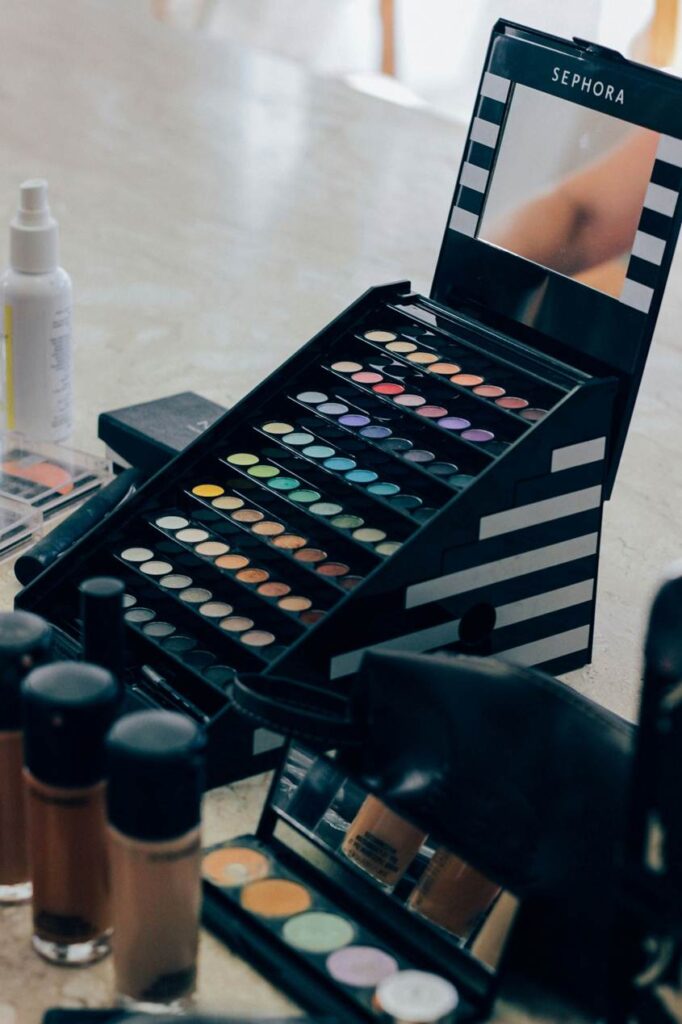
Image Source: Manu Camargo
Sephora’s Opportunities
Sephora has lucrative opportunities to grow its market share. Let’s explore Sephora’s options to drive sustainable growth:
1. Strengthen Market Presence
Sephora operates stores, e-commerce websites, and digital platforms in 35 countries. It was founded in France and conquered the European market. In the late 1990s, Sephora opened its first US shop in New York to enter the American market. It later expanded into the Middle East and Canada. However, the company doesn’t have a strong market presence in Asia, Latin America, and Africa. Sephora can open stores in emerging markets to expand its customer base. [14]
2. Expand into Fast-growing Niches
Sephora primarily caters to women. The company can expand its offerings for men to serve both genders. The men’s skincare segment is a fast-growing niche in the beauty sector. Sephora can also introduce more products for underserved women. It is already exploiting this opportunity through its incubator. In 2021, Sephora pivoted its Accelerate program to support founders of color. Its 2025 Accelerate had eight BIPOC brands, including four Black women. For example, Aziza El Wanni founded The Potion Studio to create “clean, climate-adaptive haircare for textured hair.” This product can help Sephora attract more Black women. [15]
3. Offer Cheaper Alternatives
Sephora’s prices appeal to consumers seeking premium beauty and personal care products. The company can attract budget-conscious consumers by offering cheaper alternatives. For example, Mario Badescu Seaweed Night Cream is similar to La Mer’s Creme de la Mer. A 1-ounce jar of Creme de la Mer costs $190 at Sephora, while a 1-ounce jar of Mario Badescu Seaweed Night Cream retails for $22. Sephora can offer cheap facial moisturizers to attract budget-conscious consumers. It can also customize its global pricing model to align its prices with locals’ purchasing power. [16]
4. Invest in Innovative Solutions
Data analytics, AI, Augmented Reality (AR), along with Virtual Reality (VR) are revolutionizing the beauty sector. Sephora can leverage these cutting-edge technologies to drive sustainable growth. For example, Sephora already uses generative AI to develop personalized skincare products. It can combine data analytics and AI to offer individualized beauty recommendations and skincare routines. The company can also invest in the latest AR and VR solutions for virtual try-ons, skincare diagnostics, and virtual store experiences. These technologies improve customer engagement and loyalty, enhance the in-store experience along with bridging the gap between online and offline shopping. [17]
5. Expand Strategic Partnerships
Sephora has carved a niche in the beauty care sector by partnering with innovative brands and influencers. The brand signed a distribution agreement with Kohl’s in 2021 to expand its footprint beyond city centers. As of Dec 2023, the Sephora at Kohl’s fleet had over 900 stores. The partnership generated over $1.4 billion in revenue in 2023. Sephora’s shops at Kohl’s could deliver $2 billion in sales by 2025. The beauty care retailer can sign new partners to outperform competitors and increase its market share. [18]
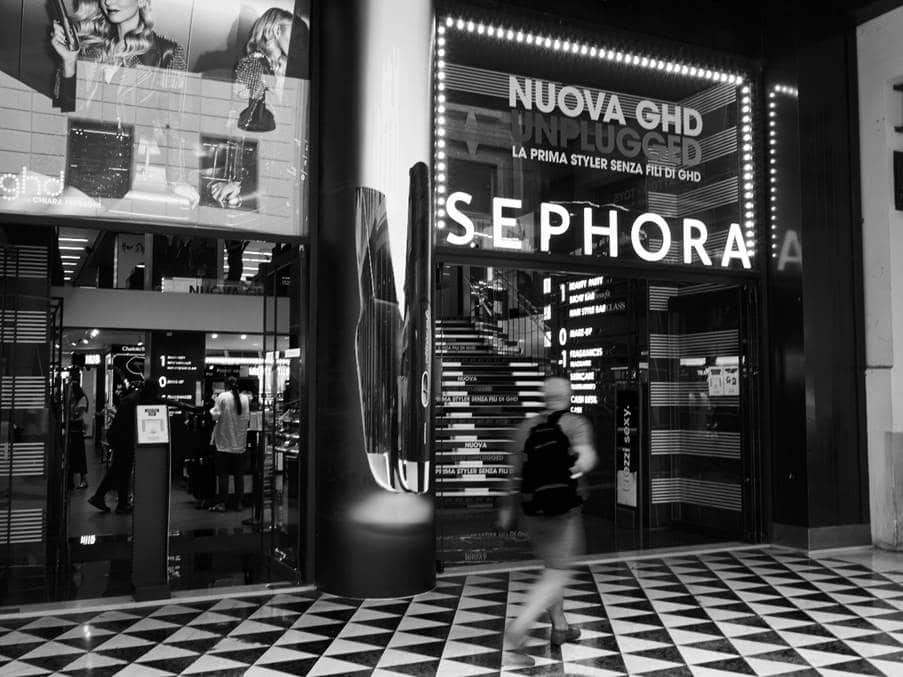
Image Source: Roberto Gualini
Sephora’s Threats
Sephora experiences several issues that threaten its business. Here are Sephora’s threats:
1. Stiff Competition
Sephora operates in the competitive beauty industry. It competes with specialty retailers, department stores, drugstores, and online platforms. Top Sephora rivals include Ulta, L’Oreal, Estee Lauder, Nordstrom, Avon, Macy’s, Oriflame, L’Occitane, MAC Cosmetics, Urban Decay, and Florence by Mills. These brands can grab Sephora’s market share. [19]
2. Economic Downturns
During recessions, consumers tend to reduce their spending on non-essential items. This threat can impact Sephora’s sales. According to a 2024 Statista survey, 50% of US Gen Z consumers bought cheaper beauty brands due to inflation. Nearly 45% of the respondents searched more for promotions and coupon codes. [20]
3. Changing Consumer Preferences
Sephora operates in a fast-evolving, trend-driven sector. The company must align with the latest trends and changing consumers’ preferences to retain its relevance. According to a 2025 survey, 67% of Gen Z prioritize sustainability, 63% seek natural ingredients, and 56% would pay more for eco-conscious products. Consumers demand cleaner, greener ingredients and AI tools that enable virtual try-ons and personalized skincare routines. Sephora should anticipate future trends to stay relevant in the dynamic beauty industry. [21]
4. Regulations and Tariffs
Sephora’s target market spans 35 countries with unique laws and standards. For example, in 2025, Donald Trump’s administration imposed 15% tariffs on products from Japan, the EU, and South Korea. The list includes beauty care products imported into the US. These tariffs could threaten Sephora’s profitability. [22]
References & more information
- Moët Hennessy Louis Vuitton (2025, Jan 28). LVMH achieves a solid performance despite an unfavorable global economic environment. LVMH.com
- Spruch-Feiner, S. (2025, Jan 24). Glossy Pop Newsletter: In 2025, Sephora goes big on K-Beauty. Glossy
- Laufik, M. (2025, Jun 30). Industry Innovators 2025: Sephora. BizBash
- John, D. (2024, Nov 7). Sephora Canada launches “Shimmer Studio by Sephora” Pop-Up. Trend Hunter
- Bashir, U. (2025, Jul 10). Sephora brand profile in the United States 2024. Statista
- Wood, Z. (2024, Feb 4). Sephora: “mothership of modern-day beauty industry” revels in a retail makeover. The Guardian
- NielsenIQ (2025, Jun 3). NielsenIQ and Sephora to Provide the Full View of Beauty with Strategic Multi-Year Data Sharing Agreement. NielsenIQ.com
- Sephora (2024, Dec 12). Sephora’s 2025 Accelerate Incubator Program Celebrates a Decade of Impact with New Class of Brand Founders. Sephora.com
- Wells, T. (2024, Apr 19). Why Is Sephora So Expensive? Examining the Prestige Beauty Retailer‘s High Prices. Marketing Scoop
- Hae-yeon, K. (2024, Mar 20). Sephora exits Korea after years of losses. Korea Herald
- Moore, K. (2025, Jan 14). Sephora to redesign its entire North American store fleet. Retail Dive
- Mattan, M. (2025, Apr 1). BrandXR Research Report: How Beauty Brands Are Using AR Mirrors to Increase Sales. BrandXR
- GCN (2025, Aug 12). Sephora Reviews Huda Beauty Ties after Founder’s Anti-Israel Remarks. Global Cosmetics News
- Petruzzi, D. (2025, Aug 14). Sephora: Statistics & facts. Statista
- Wilson, K. (2025, Jun 23). Meet the Black Founders in Sephora’s 2025 Accelerate Program. Essence
- Measom, C. (2022, Sep 24). 10 Affordable Alternatives to High-End Beauty Products. Yahoo Finance
- Feger, A. (2023, Jul 25). 3 ways beauty brands are using technologies like AI and AR to engage with consumers. eMarketer
- Kovack, K. (2024, Mar 17). Sephora at Kohl’s surpasses $1.4 billion in sales with 100+ new shops to open in 2024. Beauty Matter
- Johnson, K. (2025, Feb 6). Top 15 Sephora Competitors and Alternatives. B Strategy Hub
- Petruzzi, D. (2025, Jul 18). The impact of inflation among Gen Z beauty consumers in the US in 2024. Statista
- Rand, S. (2025, Jul 8). Beauty industry trends for 2025 and beyond: what’s transforming the market? Ask Attest
- Chia, O. (2025, Aug 3). How South Korea’s K-beauty industry is being hit by Trump tariffs. BBC News
- Featured Image by Deva Darshan
- Cosmetics Image by Manu Camargo
- Store Image by Roberto Gualini
Tell us what you think? Did you find this article interesting? Share your thoughts and experiences in the comments section below.

 Brianna Parker


 Ava Abbott
 S.K. Gupta
Add comment