

 Kevin Johnson
Toyota Motor Corporation is a Japanese automaker based in Toyota City, Aichi, Japan. It was founded in 1937 by Kiichiro Toyoda and expanded into the world’s largest auto manufacturer. The company produces over 10 million vehicles per year. Toyota’s marketing strategy drives sustainable growth and success. In 2024, Toyota generated $305.26 billion in annual revenue. Its trailing twelve months (TTM) revenue was $326.24 billion as of Oct 2025. [1]
To understand Toyota’s secret to success, here is a comprehensive analysis of its marketing strategy:
Toyota’s Target Market Overview
Toyota’s target market spans demographic, psychographic, and geographic segments. It offers a wide range of car models, attracting individuals and families across various age groups, income levels, and lifestyles. For example, the Toyota Highlander appeals to families seeking spacious cars with high safety ratings. The GR Supra targets performance-driven younger buyers and thrill seekers interested in sporty aesthetics and speed. In Sep 2025, Toyota announced plans to produce an electric vehicle model in the Czech Republic. This fully-electric car will target eco-conscious consumers seeking sustainable and eco-friendly transportation options. [2]
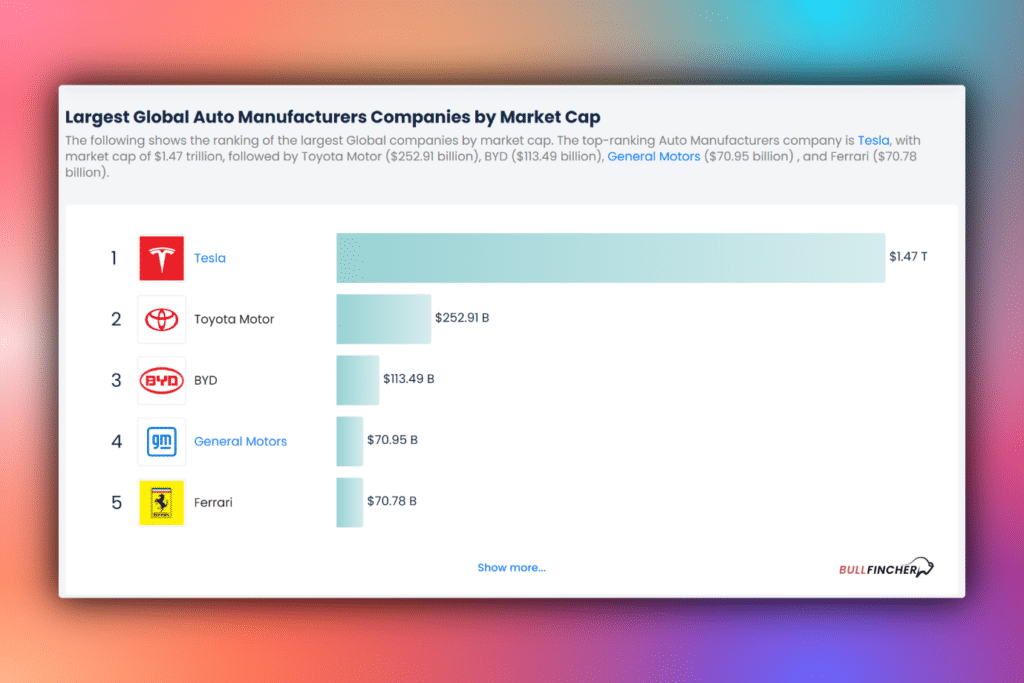
Check out: Largest Global Auto Manufacturers Companies by Market Cap
Toyota targets individuals, families, companies, and governments globally. Japan is Toyota’s largest market, followed by the US. The company generated 48 trillion Japanese yen in sales from Apr 2024 to Mar 2025. In FY 2025, Japan accounted for nearly50% of Toyota’s revenue. North America was Toyota’s largest market in terms of unit sales. Toyota was the second-best-selling brand in the US in 2024. [3]
Toyota customizes its cars and marketing campaigns regionally to resonate with consumers. For example, the automotive brand launched its fifth-generation Yaris in 2019, targeting young and affluent drivers. Then, it recruited gymnast Katelyn Ohashi to inject positivity and energy into its 2020 European marketing campaign. The campaign helped increase Toyota Yaris’ market share by 1.6% to an all-time high of 7.8%. Yaris was ranked 3rd in Europe’s B-segment (smaller passenger cars). Its campaign won the 2021 Marketing Week Masters award for Automotive. [4]
Toyota’s Positioning
Toyota is positioned as the world’s largest automotive manufacturer. The company achieved global success by focusing on quality, innovation, and customer satisfaction. According to Brand Finance’s Global 500 report, Toyota’s brand value increased 23% to $64.7 billion in 2024. The report recognized Toyota as the world’s leading car brand for 2025, solidifying its dominance in the automotive sector. Toyota was ranked 18th among all global brands and earned an AAA+ strength rating. [5]
Toyota’s positioning is defined by its vision statement: “Toyota will lead the future mobility society, enriching lives around the world with the safest and most responsible ways of moving people.” The company prioritizes quality, innovation, and respect for the planet. For example, Toyota offers hybrids and EVs to help car owners reduce their carbon footprint and impact on the environment. “We will meet challenging goals by engaging the talent and passion of people who believe there is always a better way,” says Toyota. [6]
Toyota’s Value Proposition
Toyota’s value proposition includes performance, technology, stylish design, and reliability. The company produces reliable, durable, and cost-effective vehicles. For example, the Toyota RAV4 was the best-selling model in the US in 2024. This vehicle outperformed rivals in safety, reliability, and styling. Its 2.5L four-cylinder engine delivers impressive gas mileage and performance. [7]
Another component of Toyota’s value proposition is affordability. The company offers high-quality vehicles at affordable prices. For example, the RAV4 only costs $29,250. Toyota cars retain a significant portion of their original value over time thanks to their dependability and longevity. They also have low maintenance costs and fuel efficiency. These aspects increase long-term savings for owners. [8]
Toyota’s diverse model lineup strengthens its value proposition. The company manufactures sedans, SUVs, trucks, sports cars, specialized vehicles, hybrids, and BEVs with unique styles, sizes, and features. In 2021, Toyota partnered with KINTO to advance auto innovation and evolution. KINTO updates Toyota cars with the latest software tailored to each customer. Consumers can join the KINTO subscription service to customize their Toyota vehicles. [9]
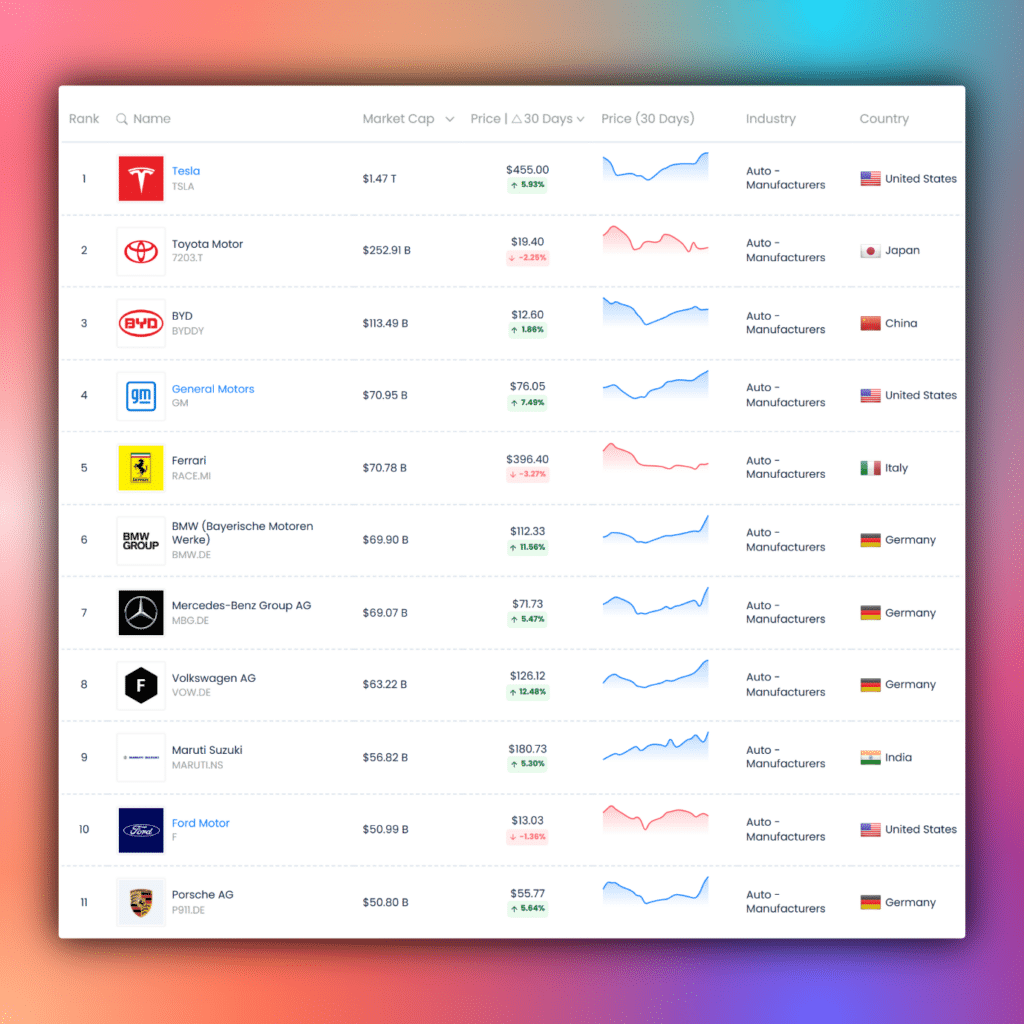
Checkout: Largest auto manufacturer companies in the world
Toyota’s Marketing Mix (4Ps)
Toyota’s marketing mix (4Ps) reflects its growth strategies and priorities. The 4Ps are product, price, place, and promotion. Let’s explore how Toyota’s 4Ps contribute to its overall marketing strategy:
1. Toyota’s Product
Toyota’s product strategy focuses on delivering high-quality, reliable, durable vehicles. The company invests in research and development (R&D) to create innovative cars. It pioneered hybrid technology with the Prius and expanded into hydrogen fuel cell vehicles. In Apr 2024, Toyota added the new 250 series to the Land Cruiser lineup in Japan. The 250 series has the first Land Cruiser with electric power steering (EPS) and SDM. EPS reduces kickback during off-road driving, while the SDM enhances driving performance, ride comfort, and handling stability. Toyota also released the ZX and VX limited edition models. It will sell 8,000 ZX and VX units. [10]
Toyota expands its product lineup with new models and redesigned versions. Its 2025 lineup includes the all-new 4Runner, Land Cruiser, updated GR Supra and Corolla, upgraded Camry, and Highlander Hybrid. The company integrates cutting-edge technologies into its vehicles. In Mar 2025, Toyota advanced its multi-pathway product strategy towards carbon neutrality. The brand unveiled the FT-Me micromobility concept, a compact battery electric vehicle (BEV) designed to tackle the challenges of evolving urban environments. It plans to introduce six new BEVs in Europe by 2026. [11]
2. Toyota’s Pricing
Toyota adopted cost-based, market-oriented, and value-based pricing strategies, strengthening its position in the competitive automotive market. The cost-based pricing approach considers the production and operational costs, while the value-based method focuses on the perceived value that customers assign to Toyota vehicles. Toyota leverages a market-oriented strategy to ensure its prices align with prevailing market conditions. For example, Trump’s tariffs increased the costs of auto production. In Jul 2025, Toyota hiked its car prices by an average of $270. The brand’s pricing strategy differentiates it from competitors with far steeper price increases. Companies like Subaru hiked their prices by over $2,000 per vehicle. [12]
Toyota customizes its pricing strategy to ensure its prices appeal to value-conscious and premium-seeking customers. The company adopts a customer-centric approach by tailoring prices for specific market segments. For example, Toyota sells its entry-level Corolla and Yaris at lower prices than premium models to attract budget-conscious buyers. Toyota also considers regional economic conditions. The company promotes mid-to-premium models in developed North American and European markets, and focuses on affordability in emerging economies such as India and Brazil. Toyota’s mid-range options include the Camry and RAV4. These models appeal to families and professionals looking for a balance of comfort, performance, and value. [13]
3. Toyota’s Place
Toyota operates in over 170 countries. The company established its manufacturing plants and assembly lines in strategic locations to enhance distribution efficiency and improve supply chain management. In Aug 2025, Toyota announced its plans to establish a new vehicle production facility in Toyota City, Japan. The company manufactures 3 million vehicles in Japan. It has production plants in China, the US, Brazil, and Europe. [14]
Toyota’s distribution strategy is driven by its dealer network system. The company developed strong relationships with authorized dealerships globally. These dealers sell Toyota cars and provide after-sales services to boost customer satisfaction and loyalty. They also run localized promotional and marketing campaigns that resonate with consumers. In Feb 2025, Toyota announced plans to improve its US dealers’ inventory. The move will increase new-vehicle sales and throughput for the dealerships. Toyota manufactured over 2 million vehicles in North America in 2024. [15]
4. Toyota’s Promotion
Toyota offers lease, cash-back, and financing deals to promote its vehicles. For example, the company offered $8,000 cash back on the 2025 Toyota bZ4X in Oct 2025. Dealers sell this car for $37,070 to $43,880. Consumers can also lease the 2025 Toyota Corolla for $189 per month for 36 months. They can access these promotions on Toyota.com or through local dealerships. These incentives encourage consumers to lease or buy Toyota cars. [16]
Toyota’s Promotional Strategy
Toyota combines promotional strategies to enhance brand awareness, attract customers, and boost sales. The company invests in television, print, and online ad campaigns, focused on its vehicles’ unique features, reliability, quality, durability, innovation, and environmental sustainability. In Sep 2025, Toyota launched the 15-second “Rugged and Capable” TV ad to promote the Tundra. The ad highlights the Tundra’s off-road capabilities. It featured Ethan Erickson and Danielle Demski. [17]
Toyota’s marketing strategy leverages multiple channels and tactics to reach and engage the target audience. The company uses social media to share product updates with consumers and address concerns or inquiries. These direct interactions build brand loyalty and create a sense of community among Toyota followers. Toyota also utilizes sponsorships and global events to increase visibility and awareness. For example, the company unveiled the Toyota Corolla Concept at the Japan Mobility Show in Oct 2025. The automaker showcased futuristic hybrid, electric, and all-gas versions of the Corolla. [18]
Toyota’s promotional strategy includes low lease and finance rates, electrification bonuses, cash incentives, and loyalty perks. The company customizes these offers regionally to reach local consumers. For example, Toyota Canada launches the “It’s Time to Toyota” campaign every summer. Its Jul 2025 Program delivered value, improved financing, loyalty rewards, and next-generation models to Canadians. It included -0.50% lease, -0.30% finance rate, and over $1,000 in stackable cash on the 2025 Prius Plug-in Hybrid. [19]

Image Credit: Jake Fagan
Toyota’s Customer Acquisition & Retention
Toyota relies on its dealerships to attract and retain customers. Its dealers leverage digital and traditional marketing strategies to appeal to consumers. In Jun 2025, Toyota Motor Europe recognized 46 retailers with the 2025 Ichiban award. These dealerships outperformed over 2,500 dealers across Europe by delivering exceptional customer experience. Six retailers received the “Going Beyond” award for exceeding expectations. “The Ichiban award is more than a trophy. It is a mark of trust earned through action,” says Toyota Motor Europe, “For Toyota, it reflects a simple truth: when retailers succeed, customers stay.” [20]
Toyota takes its products to consumers to convert them into buyers. The brand implements this strategy through sponsorships. For example, Toyota was the official automotive sponsor of the 2025 Concacaf Gold Cup. The company leveraged this event to promote the Tundra, Tacoma, and 4Runner. It launched a dynamic marketing campaign focusing on fans’ unwavering loyalty to their teams and the durability of Toyota trucks. “Soccer holds a special place in the hearts of Latino fans, where the game is more than a sport — it’s tradition, pride, and passion passed down through generations. That same spirit of endurance and strength is what drives our trucks,” said Paul Doleshal, General Manager of Motorsports and Sponsorships at Toyota. [21]
Toyota’s customer retention strategy prioritizes service delivery, loyalty, and satisfaction. The company has a loyal customer base. According to a 2025 JD Power study, Toyota leads in customer retention. Toyota ranks highest among mass market car brands, with a 62.0% loyalty rate, followed by Honda at 55.5%. Its Lexus marque was #1 in the premium SUV category. Lexus had a 57.4% loyalty rate, followed by BMW at 54.0%. Toyota was ranked second among truck brands with 61.2%, behind Ford (66.6%). These figures confirm the effectiveness of Toyota’s customer retention strategy. [22]
Toyota’s Marketing Goals (KPIs)
Toyota’s marketing goals include attracting and retaining customers, increasing revenue, and growing its market share. The brand analyzes key performance indicators (KPIs) to measure progress. These KPIs visualize the effectiveness of Toyota’s marketing strategy. According to Statista, Toyota generated $298.3 billion in revenue between Apr 2023 and Mar 2024, more than double the amount of Honda. Toyota earned a spot among the 50 publicly traded companies with the highest market capitalization thanks to its impressive financial performance. It was #44th and outperformed global giants like Nestlé, McDonald’s, and Shell. [23]
Toyota analyzes its sales volume to determine the effectiveness of its marketing strategies. The brand sold 10.8 million vehicles in 2024, making it the world’s best-selling automaker. In the first half of 2025, Toyota reported record global sales. It sold 5.5 million units, up by 7.4% compared to 2024. The company increased production by 8.8% to 5.5 million units. These figures confirm that Toyota’s marketing strategy is effective. [24]
Toyota’s KPIs include net income, profit margin, and operating profit. These KPIs measure financial health and performance. Toyota built a profitable business by focusing on consumer needs. In Feb 2025, the company raised its full-year operating profit forecast by 9% from 4.3 trillion yen to 4.7 trillion yen ($30.7 billion). The revision reflects Toyota’s confidence in its products, sales channels, and marketing efforts. [25]
References & more information
- CMC (2025, Oct 29). Revenue for Toyota in 2025. Companies Market Cap
- Carey, N. (2025, Sep 3). Toyota plans to produce first fully-electric car in Europe at its Czech plant. Reuters
- Carlier, M. (2025, Jun 4). Toyota Motor Corporation: Statistics & Facts. Statista
- MW Staff (2023, Apr 17). How Toyota Yaris increased its market share to an all-time high. Marketing Week
- ST (2025, Jan 24). Toyota Emerges as the Top Global Car Brand of 2025. Steven Toyota
- Toyota Global Vision. Toyota Motor Corporation
- Okonski, M. (2025, Apr 9). Best Toyota Cars Ranked For 2025. CarBuzz
- NTN (2024, Jun 11). Why Buy a Toyota? Exploring the Reliability and Value of Toyota Cars. Nashville Toyota North
- TMC (2022, Jun 7). Toyota and KINTO aim to provide “Cars that Evolve in Tune with People.” Toyota Motor Corporation
- TMC (2024, Apr 18). Toyota launches All-New Land Cruiser “250” Series in Japan. Toyota Motor Corporation
- Toyota (2025, Mar 12). Toyota reinforces its multi-pathway approach and its commitment to customer-focused innovation. Toyota.eu
- Moore, A. (2025, Jun 24). Toyota Price Increases Jul 2025: Why $270 hike beats competitors’ over $2,000 jumps. TopSpeed
- Lau, S. (2025, Jan 15). Toyota Pricing Strategy Analyzed: Key Components and Insights. Newswire Jet
- TMC (2025, Aug 7). Toyota to Establish New Vehicle Manufacturing Plant in Japan. Toyota Motor Corporation
- Vellequette, L. (2025, Feb 14). Toyota’s 2025 message to dealers: “Build more and sell more.” Automotive News
- Doell, Z. (2025, Oct 3). Toyota Deals: Buy or Lease a Toyota. US News
- iSpot (2025, Sep 10). 2025 Toyota Tundra TV Spot, “Rugged and Capable.” iSpot.tv
- George, P. (2025, Oct 28). The Toyota Corolla Goes Electric. Inside EVs
- PT Staff (2025, Jul 3). It’s Time to Toyota: Toyota Canada’s July 2025 Program. Pickering Toyota
- Toyota Motor Europe (2025, Jun 27). Toyota celebrates Europe’s top retailers with 2025 Ichiban awards in Bologna. Toyota.eu
- Toyota (2025, Jun 12). Toyota Gears Up for an Epic Summer as Official Sponsor of the 2025 Concacaf Gold Cup. Toyota.com
- Alexander, K. (2025, Oct 2). Toyota Leads 2025 Automotive Brand Loyalty Study. AutoSuccess
- Zandt, F. (2024, Nov 8). Toyota Makes More Money Than Any Other Japanese Company. Statista
- Campbell, J. (2025, Jul 30). Toyota posts record first-half 2025 sales as hybrid demand offsets tariff impact. CBT News
- Reuters Staff (2025, Feb 5). Toyota raises profit view by 9%, cites overall business strengthening. Reuters
- Featured Image by Christina Telep
- Truck Image by Jake Fagan
Tell us what you think? Did you find this article interesting? Share your thoughts and experiences in the comments section below.



 S.K. Gupta







Add comment